
How Much Laser Power Do You Actually Need?
Buying more kilowatts than your parts require is the most common capital mistake. Here is how to size a machine to real production.
Power is not speed
Kilowatts decide how thick you can cut, not how fast you cut thin sheet. A 12 kW machine cutting 1.5 mm mild steel is barely faster than a 3 kW machine on the same job — both are limited by how quickly the assist gas can clear the molten metal from the kerf, not by available beam power.
Where power pays off is in the thick range. Going from 6 kW to 12 kW roughly doubles your practical capacity in carbon steel and lets you move stainless and aluminium into a range that was previously plasma territory.
Size to your thickest recurring job
List the ten parts you quote most often and note the material and gauge. If the heaviest recurring job is 8 mm carbon steel, a 6 kW fiber cutter handles it comfortably with headroom. If you regularly quote 16 mm plate, you are looking at 10 kW and above.
Buying for the one-off job that arrives twice a year is how shops end up with a machine that runs at 40 percent capacity and a loan that eats the margin.
Leave room to grow — sensibly
A one-step power upgrade at the time of purchase is usually cheap; a field upgrade years later is not. If you expect to move from sheet to plate within two years, buy the headroom now.
We run live cutting demos on your material so you can see the real edge quality and speed at the wattage you are considering — before the purchase order, not after.
A practical wattage-to-thickness guide
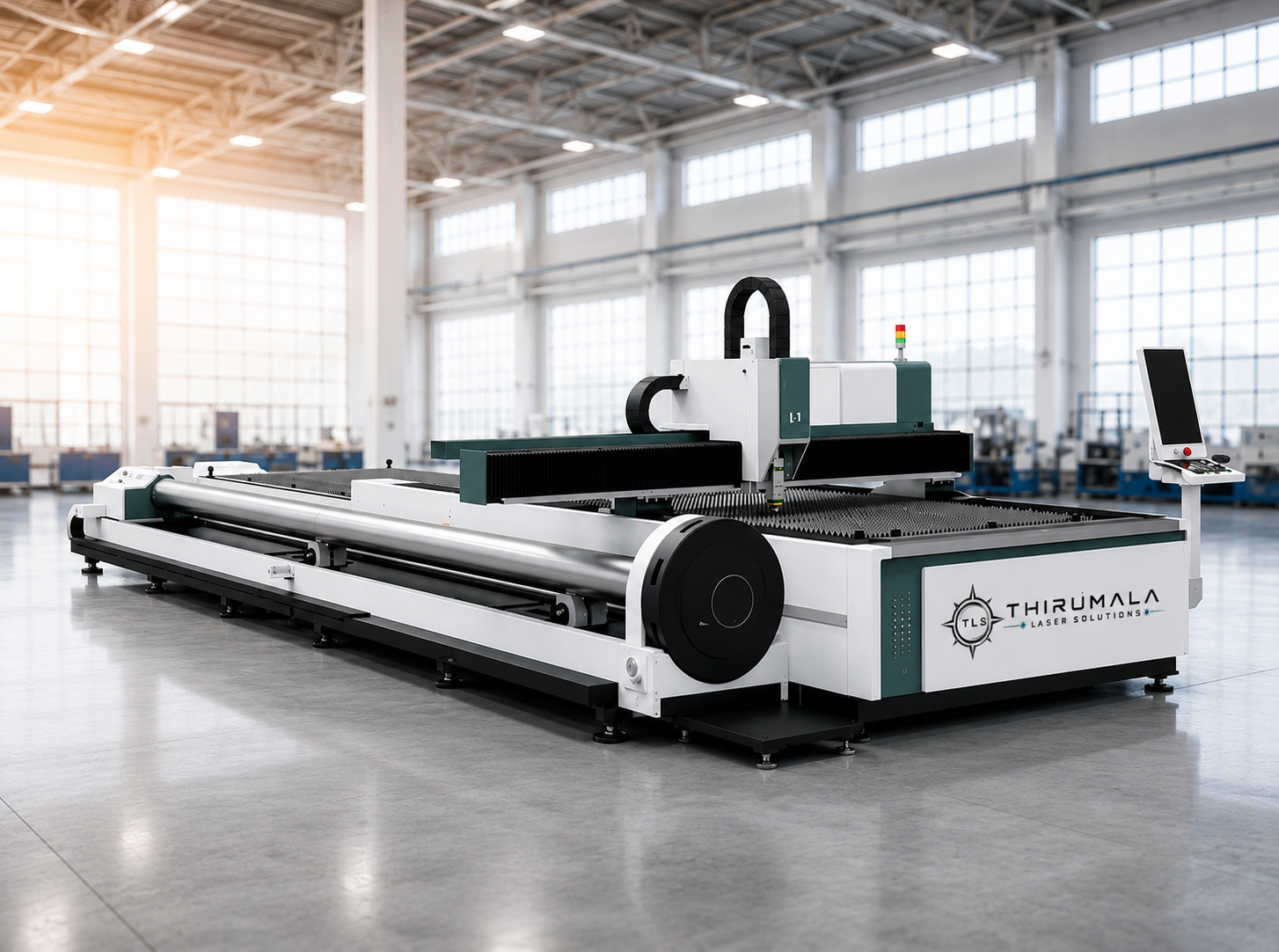
As a working rule for carbon steel with oxygen: 1.5 kW cuts up to about 8 mm, 3 kW up to 16 mm, 6 kW up to 20–22 mm and 12 kW up to 30 mm plate. For stainless steel with nitrogen, expect roughly half those thicknesses at production speed; aluminium sits close to stainless but demands more power for a clean, dross-free edge.
Thickness capability and economic thickness are two different numbers. A machine can usually cut about 25 percent thicker than the range where it is still profitable. Quote from the economic range, not the maximum on the datasheet.
Calculate parts per shift before you sign
Take your highest-volume part, add up the total cut length, divide by the cutting speed at your chosen wattage, then add piercing time per hole and roughly 15 to 20 percent for rapid moves, loading and unloading. That number — parts per shift — is the only figure that matters when you compare two quotations.
If parts per shift at 3 kW already clears your monthly requirement with 30 percent headroom, the extra kilowatts are financing capacity you will not sell. If it does not clear the requirement, no amount of negotiation on price makes the smaller machine the right buy.
The costs that arrive with more power
Higher wattage brings a bigger chiller, a heavier electrical connection, higher sanctioned load, faster consumable wear and greater assist-gas consumption. A 12 kW machine can draw three to four times the connected load of a 3 kW machine, and in many industrial estates upgrading the sanctioned load is a separate cost and a separate wait.
Bed size, automation and the control system often deliver more real productivity per rupee than raw wattage. An automatic loading and unloading tower or an exchange table frequently adds more output than a power upgrade on the same machine.
Frequently asked questions
Is 1.5 kW enough for a job-work shop? For sheet metal up to 6 mm with mixed low volumes, yes — and it is the lowest-risk entry into fiber laser cutting.
Can I upgrade the laser source later? Some platforms allow it, but the frame, drives, chiller and cutting head must all be rated for the higher power. Confirm this in writing before purchase.
What electrical supply should I plan for? Ask for the connected load in kVA, not just laser wattage, and plan a stabilised three-phase supply with proper earthing.
Share your top ten parts with our engineers and we will size the machine, quantify parts per shift and run a free live demo on your material at our Bangalore facility.