
Laser Welding Stainless: A Fabricator's First Week
What changes when a TIG shop switches to handheld fiber welding, from joint prep to polishing time.
The joint has to be honest
TIG is forgiving of a gap — you can dab filler and walk the cup. A handheld fiber welder has no filler in the beam path, so fit-up has to be tight. A gap wider than the beam spot leaves a hole instead of a seam. That means more time on the cut-to-length and tack stages, and less time grinding later.
Most shops that switch find their overall throughput rises anyway, because the polishing and blending time on stainless drops dramatically.
Heat input, and why it matters for stainless
Laser welding puts heat into a much narrower zone, so the heat-affected area stays smaller. For 304 and 316 that means less sensitisation, less carbide precipitation and noticeably less discolouration at the weld — often none at all with a proper argon shield.
Less heat also means less distortion on thin sheet, which is where fabricators usually see the biggest win in dimensional accuracy.
Operator training is the real investment
The torch feels different from a TIG torch and the weld happens faster. A two-day structured handover is enough to get a competent TIG welder producing cosmetic seams, but the instinct for travel speed and stand-off distance only comes from a week of practice on real joints.
We stay on the floor with your team for the first production week — not in a classroom.
Parameters that decide weld quality
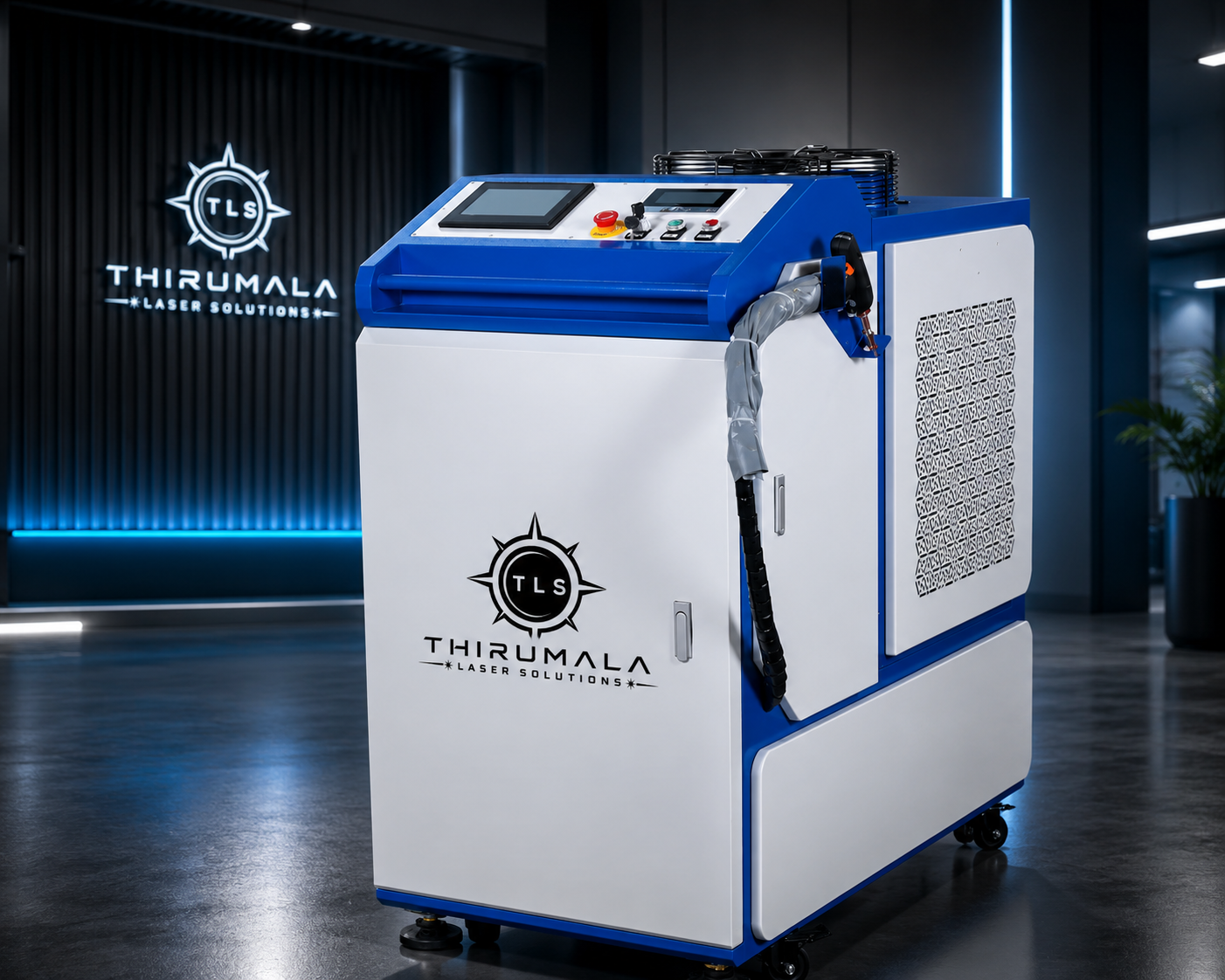
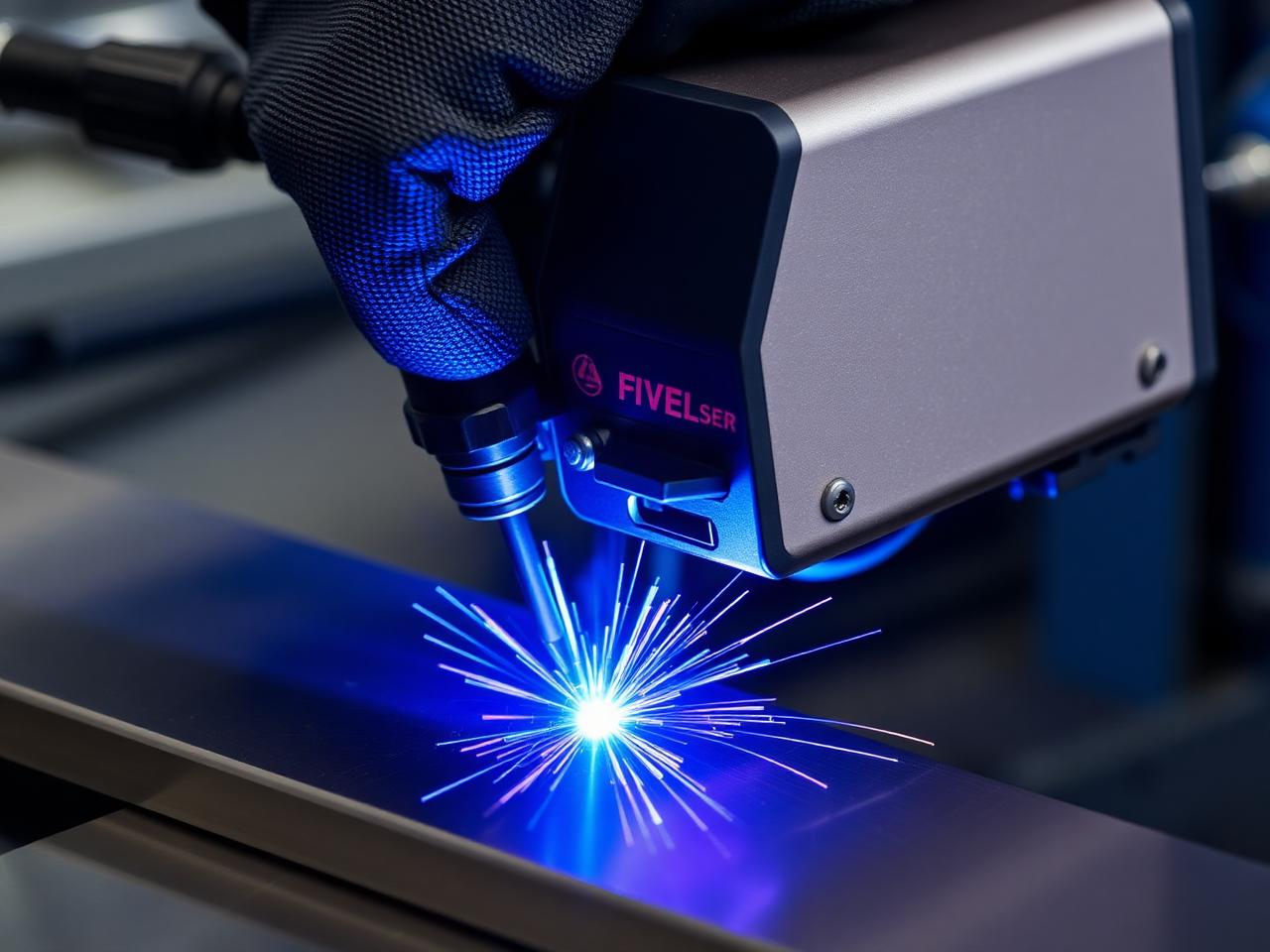
Four settings do most of the work: power, wobble width, wobble frequency and travel speed. On 1.5 mm stainless steel, a handheld fiber welder around 1 to 1.5 kW with a 2 to 3 mm wobble produces a full-penetration, cosmetically even seam at a travel speed a TIG welder cannot match.
Stand-off distance is the most common cause of inconsistency. The focal point must sit at the joint, so the operator learns to hold the nozzle tip on the work and let the guide maintain the gap rather than free-handing the height.
Argon shielding at 12 to 18 litres per minute keeps 304 and 316 bright. Reduce the flow and you get straw and blue oxide colours that then need pickling paste or mechanical polishing.
Joint design and fit-up for laser welding
Design for laser welding rather than adapting TIG drawings: prefer lap joints, flange joints and closed butt joints with zero gap, and let the laser cutter produce the mating edges so the fit-up is already accurate. A gap greater than roughly 10 percent of the material thickness begins to cost weld quality.
Where a gap is unavoidable, a wire-feed attachment adds filler and bridges up to about 1 mm. It also lets you build fillets on architectural railings, kitchen equipment and food-grade tanks where a visible bead is expected.
Safety, extraction and compliance
A handheld fiber welder is a Class 4 laser. Certified 1064 nm eyewear, a screened welding bay, interlocked triggers and a workpiece-contact safety sensor are mandatory, not optional. Stainless welding fume contains chromium and nickel compounds, so fume extraction at the torch matters for operator health and for audit compliance.
Our commissioning includes bay layout, extraction sizing, eyewear specification and a documented operator safety briefing.
Frequently asked questions
How much faster is laser welding than TIG? On thin stainless, typically three to five times faster, with far less post-weld polishing.
Can one machine weld, clean and cut? Yes — 3-in-1 handheld fiber systems switch between welding, cleaning and light cutting by changing the nozzle and the programme.
What thickness can it handle? Around 3 to 4 mm single-pass on stainless at 1.5 kW, and more with a wire feed and multiple passes.
Book a demo and weld your own joints on our handheld fiber welding machine before you decide.